Back
Back Source Code Food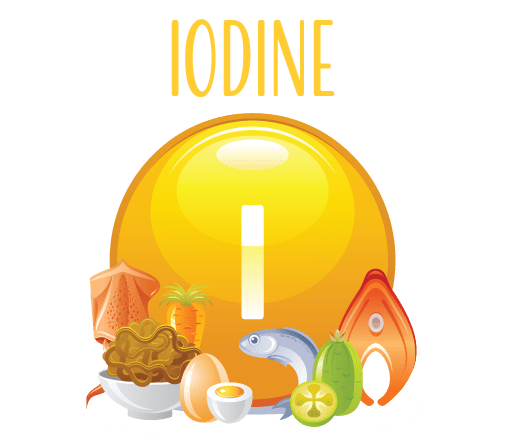
Trace Mineral
MineralIodine is a trace element that is essential for the proper functioning of the thyroid gland. There are several reasons why iodine is important for your body. First, it helps to regulate your metabolism, which affects your energy level and overall health. Second, it plays a vital role in the development of the brain and nervous system, particularly during pregnancy and infancy. Finally, it helps to maintain healthy skin, hair, and nails.

The thyroid gland produces hormones that regulate the body’s metabolism, growth, and development. Without adequate iodine, the thyroid gland can become enlarged, leading to a condition known as goiter.

It is essential for the production of thyroid hormones, which regulate the metabolism of every cell in the body. Iodine is required for the synthesis of thyroxine (T4) and triiodothyronine (T3), which are crucial for proper growth and development of the body, especially the brain.

Particularly important for the development of the fetus, as it plays a critical role in the formation of the brain and central nervous system. Inadequate iodine intake during pregnancy can result in mental retardation or irreversible brain damage in the child.

Iodine is particularly important during pregnancy, as it supports fetal brain development and helps prevent intellectual disability. In fact, the World Health Organization recommends that pregnant women consume at least 250 micrograms of iodine per day.

Without adequate iodine intake, the thyroid gland cannot produce enough T4 and T3. This can result in a range of health issues, including goiter, hypothyroidism, and developmental delays in children.

Iodine benefits our coordination is by supporting the formation of myelin, a fatty substance that covers and insulates nerve fibers. This helps to improve the transmission of signals between our brain and muscles, enabling us to perform complex movements with greater ease and efficiency. Also contributes to the development of our senses, including vision, hearing, smell, taste, and touch.

If you’ve ingested a large dose of iodine, you may experience nausea and vomiting within minutes to hours.

Iodine toxicity causes swollen salivary glands and a metallic taste in the mouth. Sores in the mouth and throat can also occur.

Skin rash is a rare symptom of , but when it does show up, it can be itchy and uncomfortable.
Excessive iodine can cause muscle weakness and tremors, making it difficult to perform routine daily tasks.

High amounts of iodine can cause gastrointestinal disarray, leading to diarrhea.
Maternal thyroid hormone deficiencies during pregnancy have been linked to neurological and neurocognitive impairments in newborns, with symptoms ranging from reduced intelligence, sluggishness, and even mental disability.

Iodine deficiency is the leading cause of preventable intellectual disability worldwide. It can also lead to goiters, thyroid cancer, and other health problems.
Japan has one of the highest iodine intakes in the world, which is thought to contribute to their low rates of thyroid cancer.
Iodine is commonly found in seawater and seaweed, as well as in certain fish, such as tuna, cod and sea salt
ADULTS NEED 150 MICROGRAMS/DAY, WHILE PREGNANT/BREASTFEEDING WOMEN NEED 220-290 MICROGRAMS/DAY. CHILDREN/ADOLESCENTS REQUIRE 90-150 MICROGRAMS/DAY DEPENDING ON THEIR AGE.
Meat & Protein

Grass-Fed Red Meat

Beef liver contains 131% of the daily value (DV) per 3-ounce serving.
Beef steak contains 18% of the DV per 3-ounce serving.
Lamb chops contain 12% of the DV per 3-ounce serving.
Pork loin contains 16% of the DV per 3-ounce serving.

Free-Range Eggs
Contain around 10-15% of the daily value per egg.
Have a similar iodine content to organic whole eggs.
Have a much higher iodine content than chicken eggs, providing around 25% of the daily value per egg.
Like duck eggs, quail eggs have a high iodine content, providing around 15-20% of the daily value per egg.
One large Omega 3 enriched egg typically contains around 10-15% of the recommended daily intake.
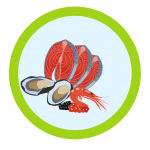
Seafood
A 3-ounce serving of cooked cod fish provides about 66% of the recommended daily value (DV) for adults.
A 3-ounce serving of shrimp contains about 15% of the daily value for an adult. However, larger shrimp may have slightly higher levels of iodine
A 3 ounce serving of canned tuna typically contains about 15-20% of the daily value
3-ounce serving of salmon can provide about 20-25% of the recommended daily intake for adults.
Pork loin contains 16% of the DV per 3-ounce serving.
Pork loin contains 16% of the DV per 3-ounce serving.
Fruits, Vegetable & Leafy Greens

LEAFY GREENS
Spinach is an excellent source of iodine. A single cup of cooked spinach contains about 30% of the daily recommended value.
Swiss chard contains approximately 20% of the daily recommended value per cup.
Collard greens provide approximately 10% of the daily recommended value per cup.
Kale is an excellent source of iodine, providing approximately 10% of the daily recommended value per cup.
Arugula contains approximately 10% of the daily recommended value per cup.
SALT
 Recipes
This is the most commonly used type of iodine-fortified salt, where iodine is added during the refining process to prevent iodine deficiency.
Sea salt naturally contains some iodine, so it is generally a good source of the mineral. However, it has varying concentrations depending on the location it is harvested.
Create a free account to unlock recipes for each source, and start turning this into meals.
Try FeedMeFood for free