Back
Back Source Code Food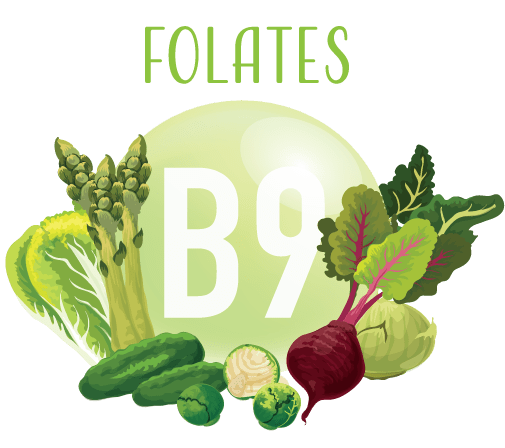
Vitamin B9
VitaminFolate also known as Vitamin B9 plays an essential role in several key bodily functions. Adequate dietary consumption or supplementation can help prevent anemia, protect against birth defects, and promote overall health and well-being.

Crucial during periods of rapid growth and pregnancy. Helps regulate embryonic and fetal nerve cell formation Reduce the risk of birth defects of the brain and spine by taking folic acid regularly and maintaining a healthy pregnancy. Pregnant women should take at least 400-800 micrograms of folic acid daily before and during the first trimester.

Folic acid, also known as vitamin B9, is a crucial nutrient that plays a vital role in the development and maintenance of healthy cells in the body. It helps to produce and maintain new cells, including red blood cells, and supports the production of DNA and RNA, the genetic material that forms the basis of all life. Making it especially important during pregnancy and for overall health.

Folate is a vital nutrient involved in DNA and RNA synthesis by acting as a coenzyme. Its deficiency may cause anemia and neural tube defects.

Folate helps regulate the production of neurotransmitters, such as serotonin, that affect mood.

Research shows that a deficiency in Vitamin B9 can lead to a decrease in serotonin and dopamine levels, chemicals that regulate mood and sleep. This can result in symptoms such as fatigue and insomnia.

Recent research suggests that deficiencies in folate may lead to premature graying of hair. A B9 deficiency can also cause other iron-related problems that can lead to hair loss and thinning,

One of the most common issues associated with folic acid is nausea. This can be caused by taking high doses of vitamin B9, which can be commonly found in supplements. Additionally, individuals with digestive conditions that affect the gastrointestinal tract, such as inflammatory bowel disease (IBD), may have difficulty absorbing folic acid properly

Studies have shown that low levels of folate in the blood can increase the risk of heart disease, stroke, and other cardiovascular problems. This is because folate helps to lower levels of homocysteine in the blood, which is an amino acid that can damage arteries and increase the risk of heart disease.

Folate-deficiency anemia is a serious medical condition that occurs when there is a lack of folic acid in the blood. Folic acid is an essential nutrient that our bodies need to produce healthy red blood cells and to function properly. When we do not consume enough folic acid, our bodies cannot produce enough red blood cells, causing anemia.
Did you know that the word “folate” comes from the Latin word “folium,” which means leaf? This is because leafy green vegetables, such as spinach and kale, are excellent sources of vitamin B9. Furthermore, while folic acid is commonly found in supplements and fortified foods, the natural form of vitamin B9 is called folate.

Pro tip: Cooking can decrease the folate content in food, so it is important to choose cooking methods that preserve folate, such as steaming or lightly stir-frying.
Adults should consume 400 micrograms (mcg) of intake per day. Pregnant women should increase their intake to 600-800 mcg per day to support proper fetal development.
Meat & Protein
FISH & SEAFOOD

Another popular fish, salmon contains 5% of the daily DV of vitamin B9 in a 3-ounce serving.
While not a significant source of vitamin B9, shrimp contains a small amount – 2% of the daily DV in a 3-ounce serving.
These shellfish are one of the best sources of B9 in the seafood world, with 14% of the daily DV in just 3 ounces.
Another shellfish that’s rich in vitamin B9, oysters contain 7% of the daily DV in 6 medium-sized oysters.
This versatile fish provides a decent amount of B9, with 7% of the daily DV in a 3-ounce serving.

Grass-Fed Red Meat
It is the most vitamin B9-rich food. 100 grams of beef liver contains approximately 595% DV of folate
It is another excellent source of vitamin B9. 100 grams of lamb’s liver contains around 320% DV of folate.
Beef chuck roast is not only a rich source of vitamin B9 but also an excellent source of protein. 100 grams of beef chuck roast contains about 12% DV of folate.
It is a delicious and nutritious red meat that is also high in vitamin B9. 100 grams of beef tenderloin contains around 10% DV of folate.
It is a popular meat cut that is also a good source of vitamin B9. 100 grams of pork chops contains approximately 8% DV of folate.
FREE RANGE WHITE MEAT
Turkey Breast: A 100g serving of turkey breast provides 23% of the daily value for vitamin B9 or folate. It is also a great source of lean protein.
Chicken liver is a nutrient-dense organ meat that provides 40% of the daily value for vitamin B9 per 100g serving. It is also high in vitamins A and B12.
Chicken breast is a lean and versatile meat that contains 6% of the daily value for vitamin B9 per 100g serving. It is also a good source of lean protein.
A 100g serving of pork tenderloin provides 6% of the daily value for vitamin B9. It is a lean cut of pork that is also high in protein.

FORTIFIED DAIRY
many brands of milk are fortified with vitamin B9, with some providing up to 25% of the daily value per serving.
Yogurt: like milk, many brands of yogurt are fortified with B9, with some providing up to 20% of the daily value per serving.
some types of cheese, such as cheddar and mozzarella, are fortified with B9, with some providing up to 15% of the daily value per serving.
Cottage cheese: some brands of cottage cheese are fortified with vitamin B9, with some providing up to 8% of the daily value per serving.
some brands of butter are fortified with vitamin B9, with some providing up to 10% of the daily value per serving.
Fruits, Vegetable & Leafy Greens
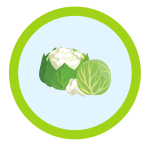
CRUCIFEROUS
A 1-cup serving of cooked Brussels sprouts contains 25% of the daily value of B9.
Broccoli – A 1-cup serving of cooked broccoli contains 14% of the daily value of vitamin B9.
Cauliflower – A 1-cup serving of cooked cauliflower contains 10% of the daily value of B9.
Cabbage – A 1-cup serving of cooked cabbage contains 6% of the daily value of vitamin B9.
A 1-cup serving of cooked kale contains 5% of the daily value of vitamin B9.
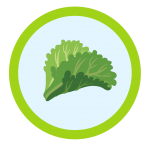
LEAFY GREENS
This leafy green is an excellent source of vitamin B9, with a whopping 49% daily value per cup. It is also a good source of vitamins A and C.
Collard greens are another green that is rich in vitamin B9, providing 44% daily value per cup. This leafy green is packed with nutrients, including vitamins K, C, and A.
Mustard greens are an excellent source of vitamin B9, with 23% daily value per cup. This leafy green is also rich in vitamins K, C, and A, as well as antioxidants.
Romaine lettuce is a good source of B9, providing 16% daily value per cup. It is also rich in vitamins K, C, and A.
Turnip greens are another leafy green that is high in vitamin B9, providing 20% daily value per cup. This nutrient-dense green is also a rich source of vitamin K and calcium.
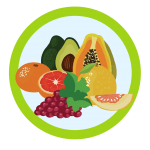
ORGANIC FRUIT
Another popular fish, salmon contains 5% of the daily DV of vitamin B9 in a 3-ounce serving.
While not a significant source of B9, shrimp contains a small amount – 2% of the daily DV in a 3-ounce serving.
These shellfish are one of the best sources of vitamin B9 in the seafood world, with 14% of the daily DV in just 3 ounces.

WHOLE GRAINS
Quinoa is a seed that is often referred to as a whole grain due to its nutritional value. It is a great source of vitamin B9, with a daily value % of 19%.
Brown rice: Brown rice is a whole grain that is rich in vitamins and minerals. It has a daily value % of vitamin B9 of 6%.
Oatmeal is a popular breakfast food and a great source of vitamin B9. It has a daily value of 10%
Whole wheat bread: Whole wheat bread is a good source of fiber and vitamins, including vitamin B9. It has a daily value % of 6%.
Barley is a nutritious whole grain that can be used in soups and stews. It has a daily value % of vitamin B9 of 9%.
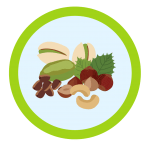
NUTS & SEEDS
 Recipes
1 cup of sunflower seeds contains 105% of the daily recommended intake of B9.
Just 1 cup of peanuts contains 88% of the daily recommended intake of B9.
1 cup of pistachios contains 31% of the daily recommended intake of B9.
One cup of flaxseeds contains 29% of the daily recommended intake of B9.
1 cup of almonds contains 23% of the daily recommended intake of B9.
One cup of chia seeds contains 22% of the daily recommended intake of B9.
Just 1 cup of cashews contains 15% of the daily recommended intake of B9.
Create a free account to unlock recipes for each source, and start turning this into meals.
Try FeedMeFood for free