
A practical place to start
Understanding High Cholesterol
Food choices can influence blood lipids, especially LDL cholesterol, but nutrition is only one part of cholesterol management. Genetics, age, thyroid disease, diabetes, medications, and other factors can also affect cholesterol levels.
Cholesterol is a waxy substance the body needs, but elevated levels of LDL cholesterol can contribute to plaque buildup in arteries and increase cardiovascular risk. HDL cholesterol and triglycerides provide additional information about a person’s lipid profile.
A lipid panel and overall cardiovascular risk assessment are more useful than focusing on one food or one cholesterol number in isolation.
At the grocery store
Foods and patterns worth understanding
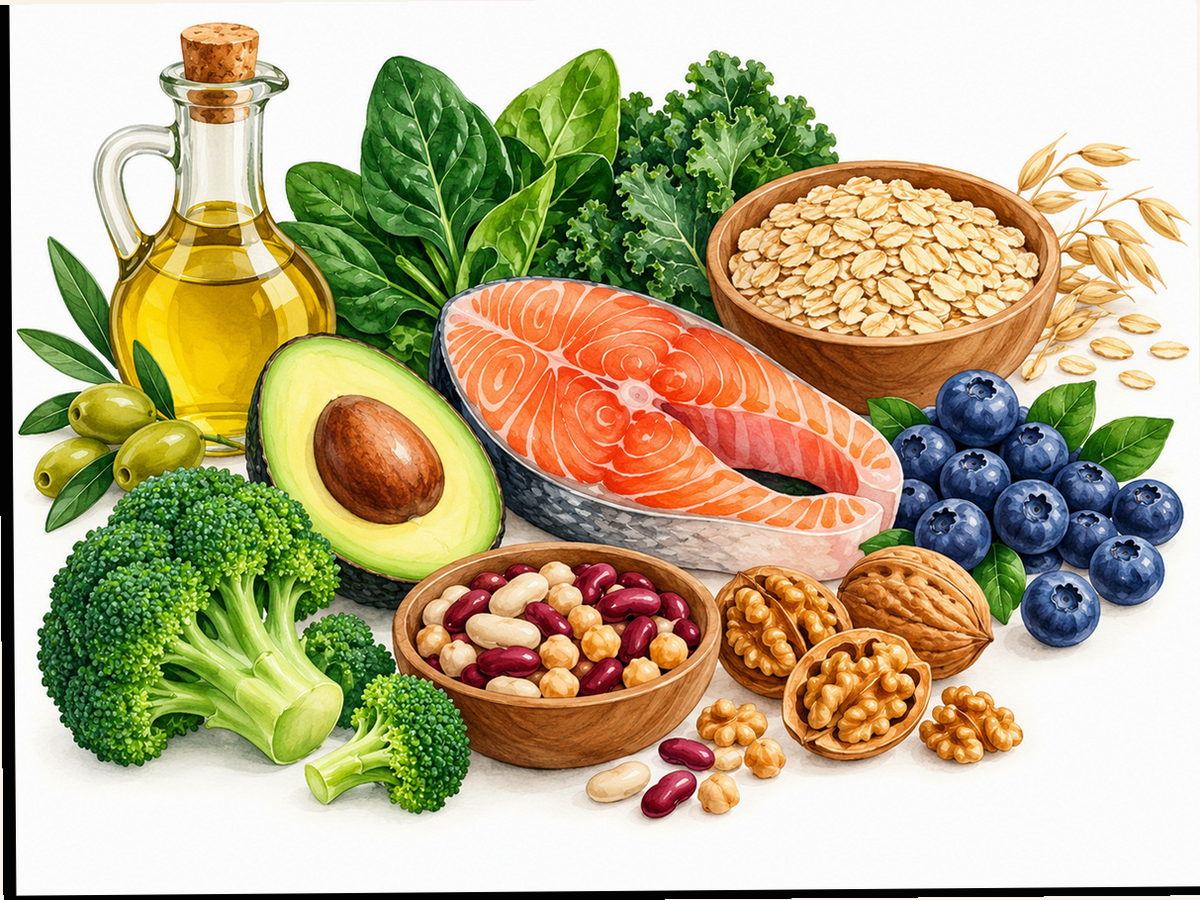
The evidence is strongest for replacing saturated fat with unsaturated fat and increasing fiber-rich plant foods.

Soluble-fiber foods
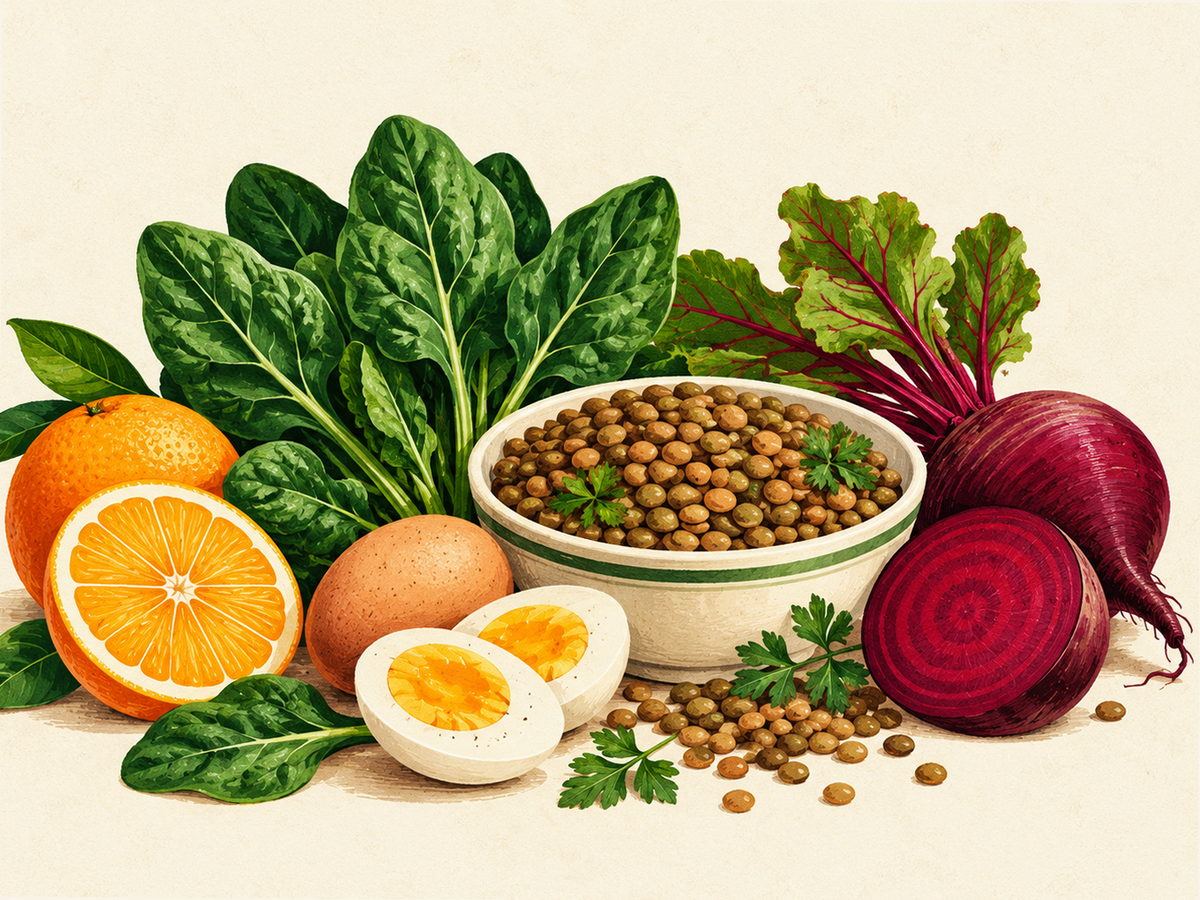
Oats, barley, beans, lentils, apples, and citrus can contribute soluble fiber.

Unsaturated fats
Olive oil, nuts, seeds, avocado, and fish can replace some saturated-fat sources.

Beans and legumes
Legumes provide both soluble fiber and plant protein.
Vegetables
Vegetables help build a high-fiber eating pattern with low energy density.
Whole fruit
Whole fruit can replace desserts or snacks high in added sugar and saturated fat.
In the kitchen
What this can look like in a meal
These familiar meal ideas illustrate food patterns, not a prescribed diet or a required portion size. The right choices depend on the person and their circumstances.

Berry overnight oats with nuts
Oats provide soluble fiber while nuts add unsaturated fat.
Chicken salad with chickpeas
Vegetables, lean protein, and legumes in one meal.
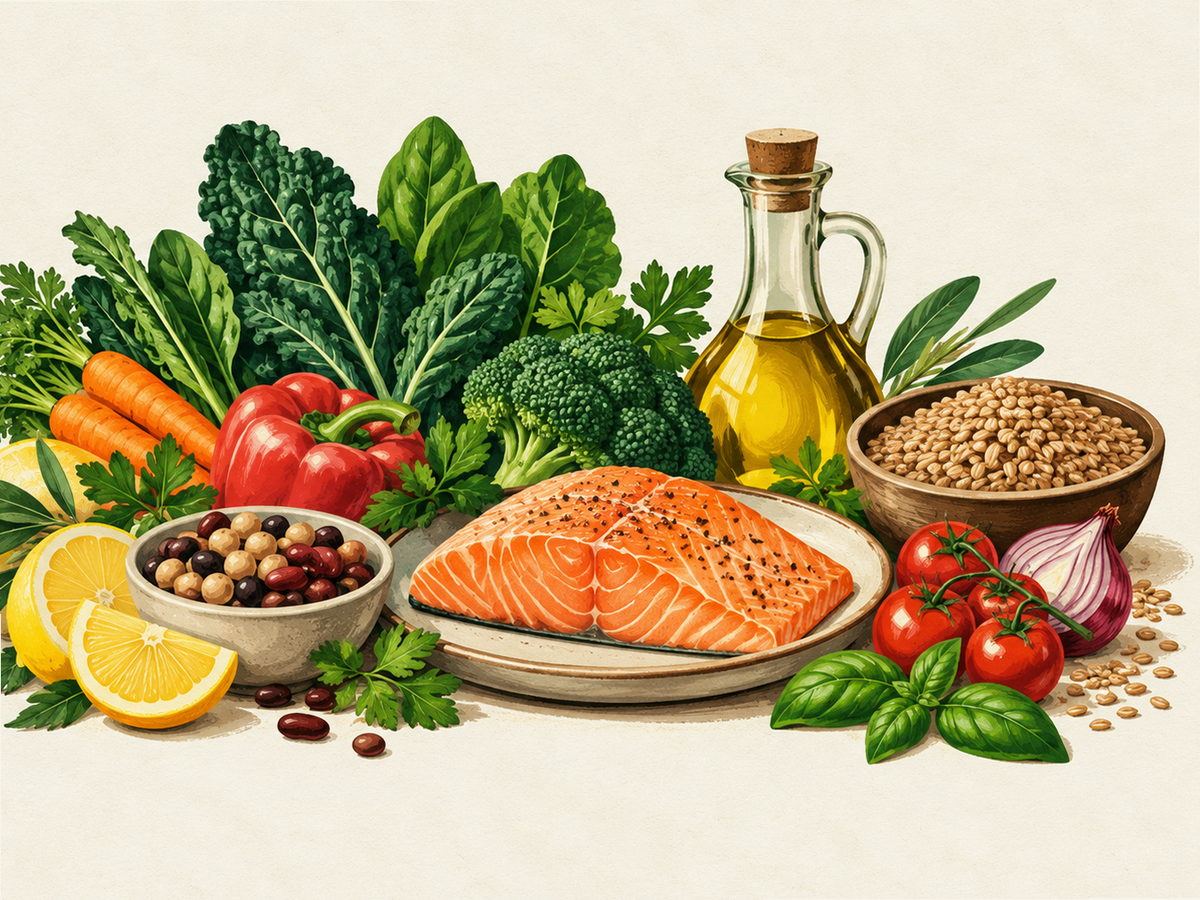
Baked salmon with roasted vegetables
Fish and vegetables with an unsaturated-fat cooking pattern.
Apple slices with almonds
Whole fruit plus unsaturated fat and fiber.
Looking for more cooking ideas? Explore public recipes on The Fuel Board.
What the evidence shows
What research tells us
Current heart-health guidance emphasizes replacing sources of saturated fat with unsaturated fats rather than simply reducing all fat. Soluble fiber from foods such as oats, barley, beans, lentils, and some fruits can also help lower LDL cholesterol.
Overall dietary pattern matters. Vegetables, fruits, whole grains, legumes, nuts, fish, and minimally processed foods fit evidence-based heart-health patterns. For most people, saturated fat is a more important dietary target than cholesterol in individual foods.
Individual needs matter
When more personal guidance helps
Very high LDL cholesterol can be strongly influenced by genetics and may require medication in addition to food changes.
If you have cardiovascular disease, diabetes, kidney disease, or a history of stroke or heart attack, cholesterol goals may be more intensive and should be set with your healthcare team.
Learn from the source