
A practical place to start
How Men’s Hormones and Metabolism Can Change With Age
Men do not go through a sudden menopause-like transition. Hormonal and reproductive changes usually happen gradually with age, and testosterone can decline over time. Muscle, body composition, bone, cardiovascular risk, glucose regulation, prostate health, sleep, medications, and other health conditions can also change. Nutrition matters for overall health, but food cannot diagnose “low T” or reliably boost testosterone as a treatment.
Normal aging in men can include gradual changes in testosterone, sperm production, sexual response, muscle, and body composition. These changes vary substantially from person to person and do not create one single medical stage called “male menopause.”
The prostate also commonly enlarges with age, and urinary symptoms become more common. Fatigue, lower libido, erectile changes, mood changes, or muscle loss can have many causes, so they should not automatically be blamed on testosterone or aging.
At the grocery store
Foods and patterns worth understanding
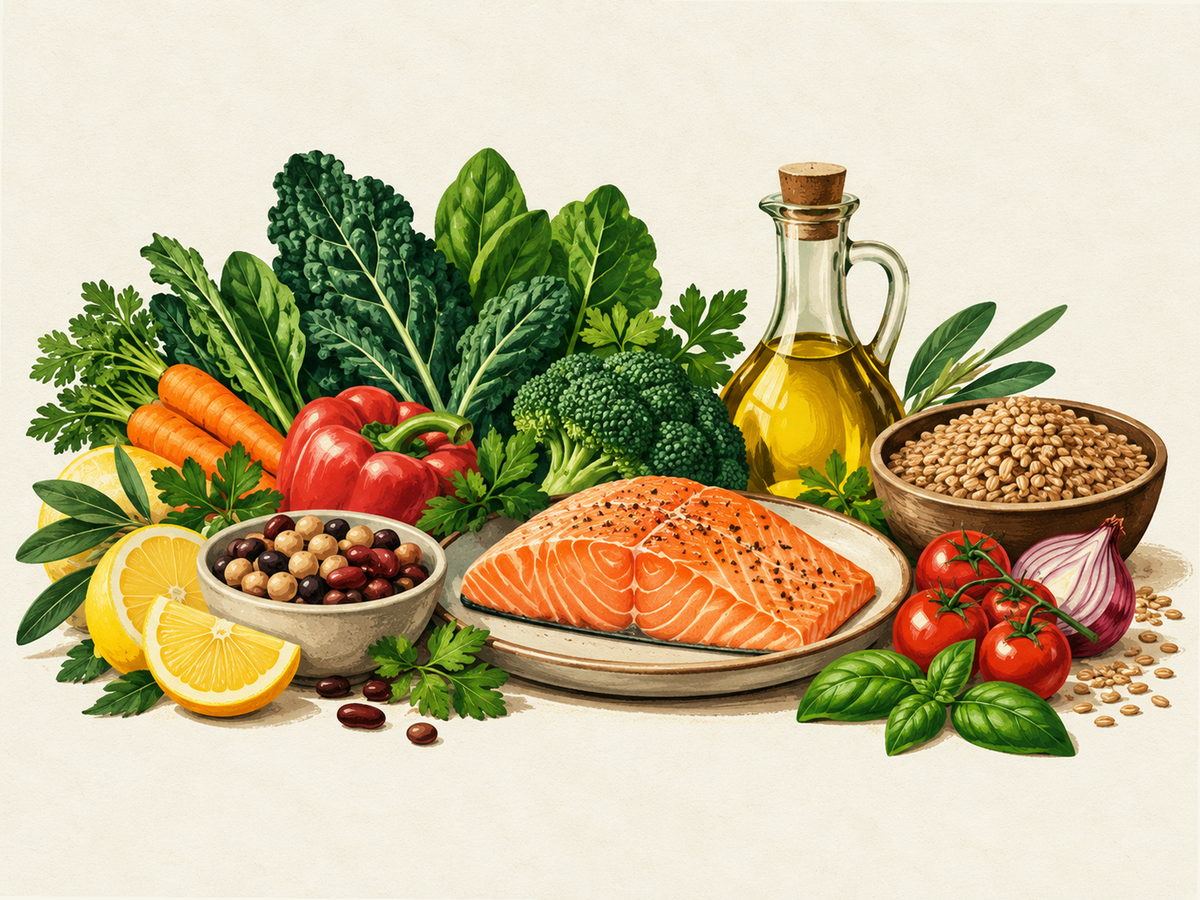
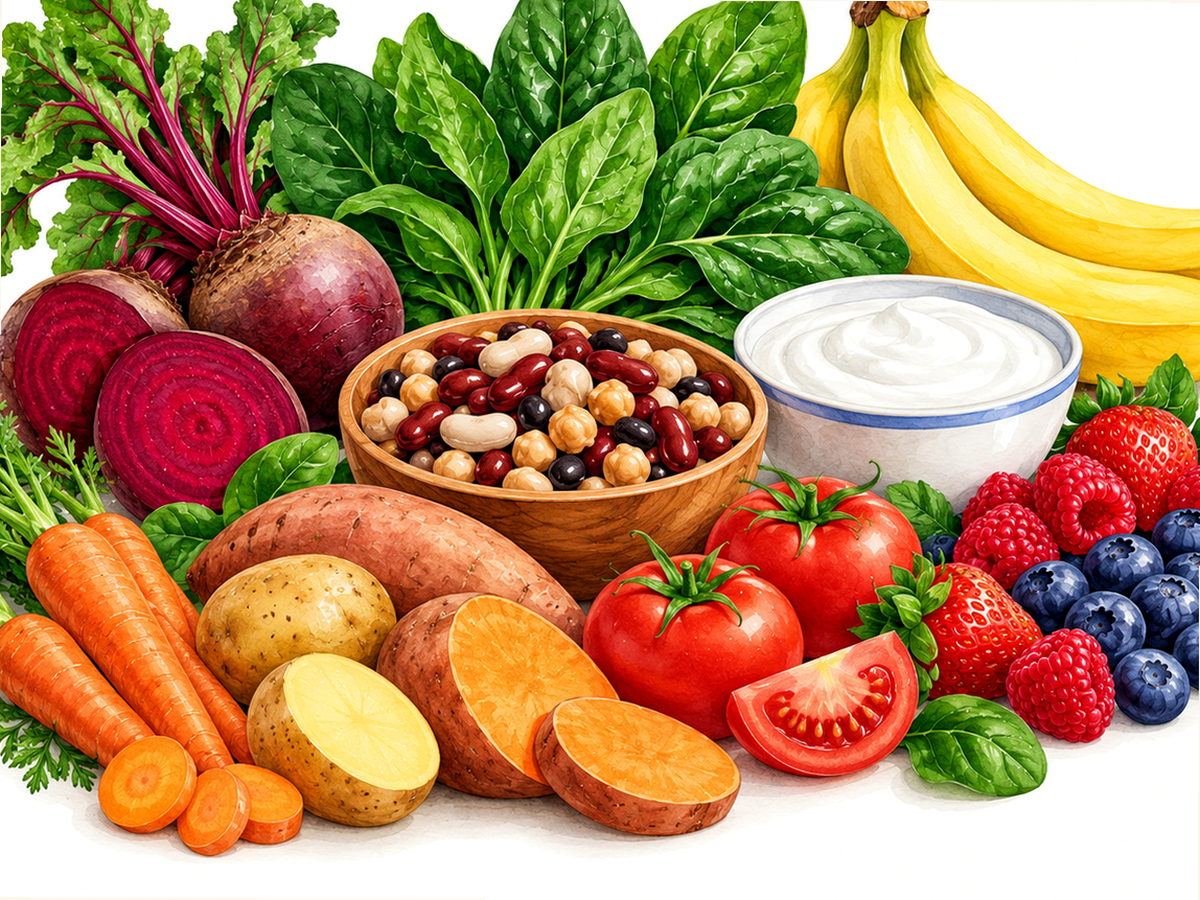
These foods support general muscle, bone, cardiovascular, and metabolic nutrition needs. They are not “testosterone boosters.”

Protein foods
Fish, poultry, eggs, dairy or alternatives, beans, lentils, nuts, and seeds can help meet protein needs for muscle maintenance.

Calcium and vitamin D foods
Dairy or fortified alternatives, fish, eggs, and selected greens can contribute nutrients important for bone health.

Whole grains and legumes
Oats, brown rice, barley, beans, lentils, and similar foods provide fiber and can fit cardiometabolic eating patterns.
Vegetables and fruit
A wide variety supports fiber, potassium, and overall diet quality without promising hormone effects.
Unsaturated fats and fish
Olive oil, avocado, nuts, seeds, and fish can fit heart-healthy eating patterns in place of some saturated-fat sources.
In the kitchen
What this can look like in a meal
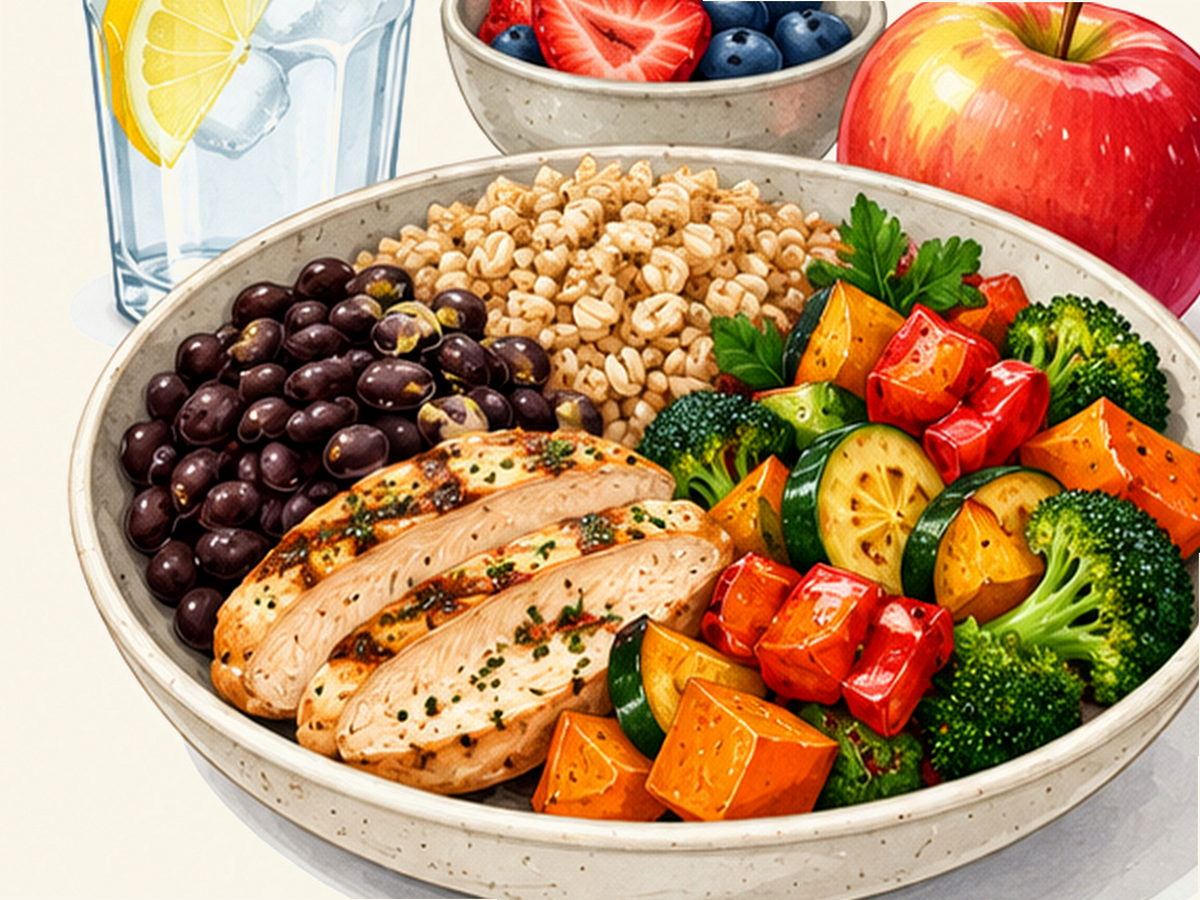
These familiar meal ideas illustrate food patterns, not a prescribed diet or a required portion size. The right choices depend on the person and their circumstances.

Oatmeal with berries, nuts & seeds
Whole grains, fruit, and plant fats in an easy breakfast.
Chicken, vegetables & whole grain
Protein, vegetables, and a high-fiber carbohydrate in one straightforward meal.
Bean bowl with avocado & vegetables
Plant protein, fiber-rich carbohydrates, and unsaturated fat.
Salmon, greens & roasted vegetables
Fish, vegetables, and a whole-food starch in a simple dinner.
Looking for more cooking ideas? Explore public recipes on The Fuel Board.
What the evidence shows
What research tells us
The Endocrine Society’s 2026 statement emphasizes that hypogonadism should be diagnosed only when compatible symptoms occur together with consistently low, accurately measured testosterone. Symptoms alone are not diagnostic, and routine population screening of asymptomatic men is not recommended.
NIA research shows that muscle mass and strength generally peak in early adulthood and then decline gradually, with faster losses later in life. Adequate protein, sufficient overall energy and nutrients, and resistance activity are relevant to preserving muscle, while heart-healthy eating patterns remain important as cardiovascular and metabolic risk changes with age. No food has been shown to treat true testosterone deficiency.
Individual needs matter
When more personal guidance helps
If low libido, erectile problems, fatigue, mood changes, reduced muscle, infertility, or other symptoms are concerning, ask a clinician to evaluate the full picture rather than assuming “low testosterone.” Diagnosis requires appropriate testing and assessment of other possible causes.
New urinary symptoms, difficulty emptying the bladder, blood in urine, or significant changes in urination deserve medical evaluation. Avoid over-the-counter “testosterone boosters” or hormone products marketed without evidence or medical supervision.
Learn from the source