
Source Code Food / Compound
CoQ10
Coenzyme Q10 is a compound your body makes and uses in cellular energy production. It can also act as an antioxidant.
A good place to start
What is CoQ10?
CoQ10 participates in electron transport used to make cellular ATP.
This is a food compound, not an essential vitamin or mineral with a daily requirement. The research and the role of food deserve to be considered separately from concentrated supplements.
At a glance
Everyday food sources
Meat · Fatty fish
Dietary target
No established RDA or AI
What researchers investigate
What we know about CoQ10
Mitochondria
CoQ10 participates in electron transport used to make cellular ATP.
Redox activity
CoQ10 can move between oxidized and reduced forms.
Antioxidant role
Reduced CoQ10 can act as an antioxidant in lipid environments.
Research area
Supplemental CoQ10 has been studied in several clinical contexts, with results depending on the condition and study design.
The everyday kitchen
Where to find it in food
These familiar foods can contribute CoQ10. How much they contain depends on serving size, processing, variety, and fortification.
Meat
Fatty fish
Peanuts
Sesame seeds
Broccoli
Food quantities vary. For exact amounts, consult USDA FoodData Central or the nutrient-specific NIH reference below.
A useful distinction
Is there a daily target?
CoQ10 is made by the body and has no established Dietary Reference Intake. Supplemental doses studied in research are not food-intake targets.
In the kitchen
A familiar place to start
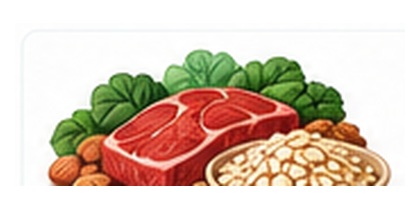
CoQ10 occurs in foods such as fish, meat, and peanuts, but normal foods contain much smaller amounts than concentrated supplements.
One ingredient never tells the whole nutrition story. Your overall food pattern and individual needs matter more.
Read a little further
Research & trusted sources
Check the original references for nutrient-specific evidence, food data, special populations, and the distinction between foods and supplements.