
A practical place to start
Understanding Polycystic Ovary Syndrome (PCOS)
Healthy eating and physical activity are core parts of PCOS care, especially for metabolic health, but there is no single diet that has been shown to be best for everyone with PCOS. Preferences, culture, fertility goals, medications, metabolic risk, and eating-disorder risk all matter.
PCOS is a hormonal and metabolic condition that can affect menstrual cycles, androgen levels, fertility, insulin resistance, and long-term cardiometabolic health. Symptoms and health risks vary from person to person.
The international guideline emphasizes shared decision-making, healthy lifestyle behaviors, emotional wellbeing, and awareness of weight stigma.
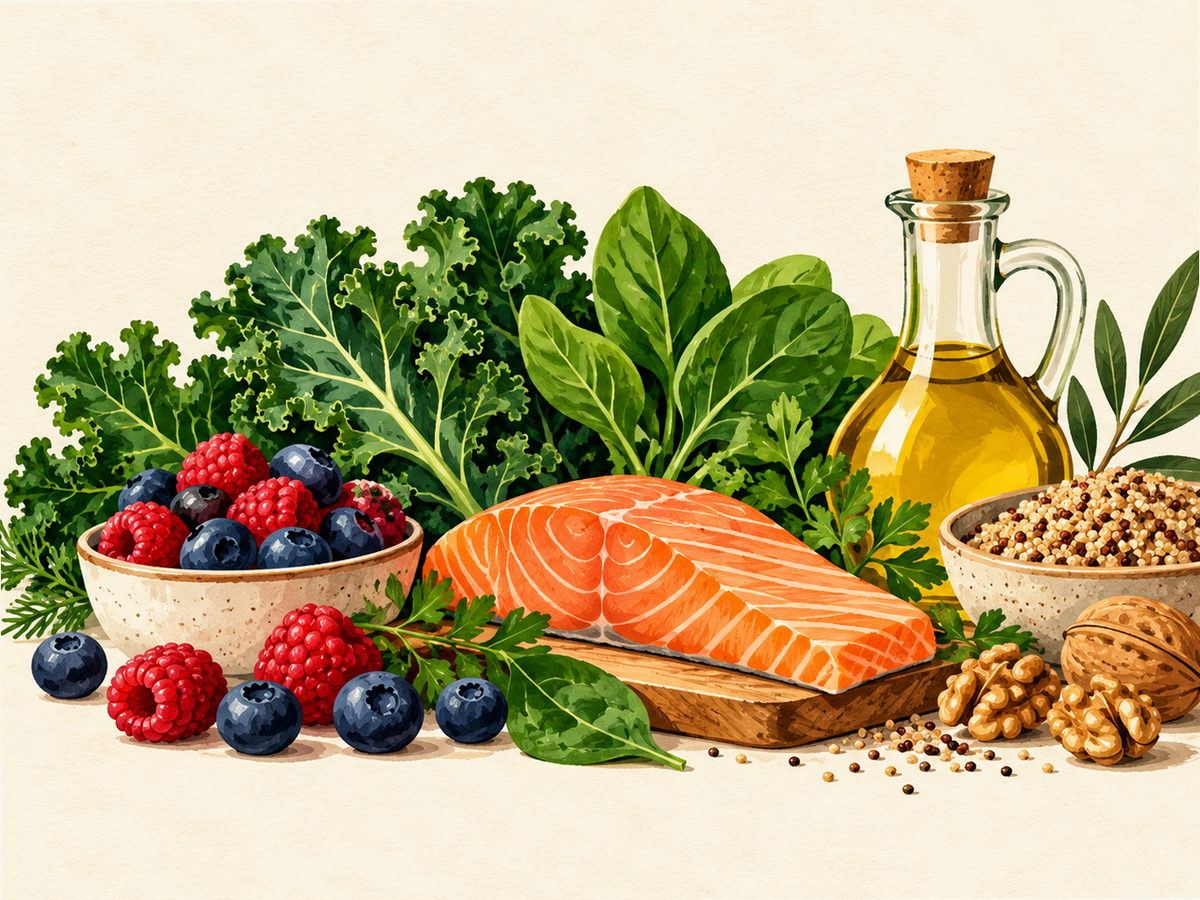
At the grocery store
Foods and patterns worth understanding
The evidence favors sustainable healthy eating patterns rather than a rigid “PCOS diet.”

Vegetables
Vegetables add fiber and micronutrients without requiring a restrictive eating pattern.

Whole grains and fiber
Oats, barley, quinoa, and other whole grains can support fiber intake.

Protein foods
Fish, poultry, eggs, beans, lentils, dairy, and other proteins can help build balanced meals.
Unsaturated fats
Nuts, seeds, avocado, olive oil, and fish fit balanced eating patterns.
Whole fruit
Fruit can fit PCOS eating patterns and does not need to be automatically eliminated because it contains carbohydrate.
In the kitchen
What this can look like in a meal
These familiar meal ideas illustrate food patterns, not a prescribed diet or a required portion size. The right choices depend on the person and their circumstances.

Overnight oats with berries and nuts
A fiber-rich breakfast with fruit and unsaturated fat.
Chicken, bean, and vegetable salad
Protein, legumes, and vegetables in a flexible meal.
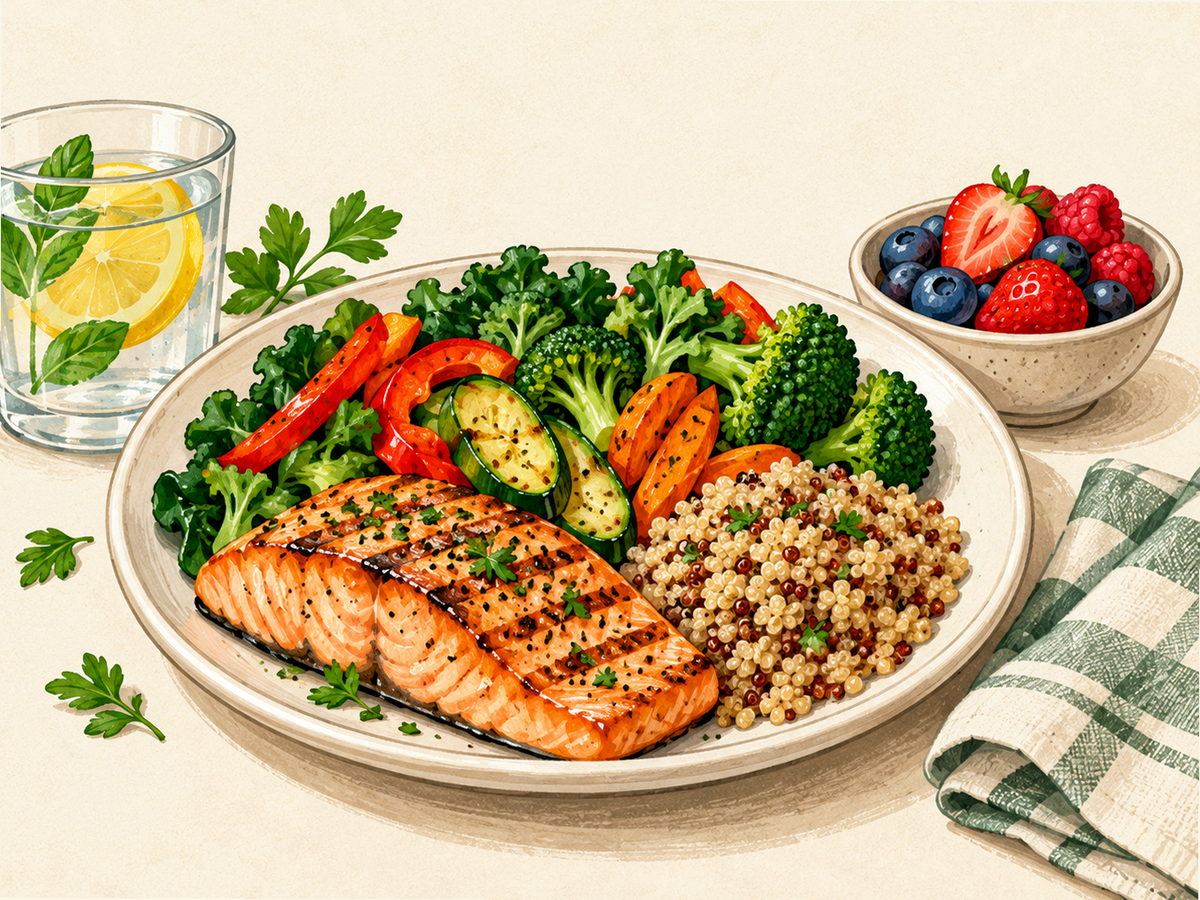
Salmon with quinoa and roasted vegetables
A whole-food meal with protein, fiber, and unsaturated fat.
Fruit with nuts or yogurt
A practical snack combining fruit with protein or fat.
Looking for more cooking ideas? Explore public recipes on The Fuel Board.
What the evidence shows
What research tells us
The international evidence-based guideline supports healthy eating and physical activity for general health, quality of life, body composition, and metabolic outcomes. It does not identify one superior macronutrient split or named diet for everyone with PCOS.
The guideline emphasizes sustainable eating that fits individual preferences and goals, notes benefits of healthy lifestyle even without weight loss, and specifically calls for reducing weight stigma in care.
Individual needs matter
When more personal guidance helps
Irregular periods, fertility concerns, pregnancy planning, diabetes risk, sleep apnea, anxiety, depression, and eating disorders may require individualized care beyond general nutrition information.
If weight loss is discussed as part of care, goals should be individualized and approached without stigma; health benefits from lifestyle changes can occur even without weight loss.
Learn from the source