
A practical place to start
Understanding Perimenopause
Perimenopause is the transition leading up to menopause, when ovarian hormone levels can fluctuate and menstrual cycles often change. Hot flashes, night sweats, sleep disruption, mood changes, and other symptoms may occur, but experiences vary widely. Food cannot stop the transition or “balance hormones,” yet nutrition still matters for bone, muscle, cardiovascular, and metabolic health through midlife.
Perimenopause usually begins before the final menstrual period and can last several years. Estrogen and progesterone levels can rise and fall unevenly, which is why cycle timing and symptoms can become less predictable.
Menopause is reached after 12 consecutive months without a menstrual period when there is no other cause. Hormonal contraception, surgery, medications, and some medical conditions can make the timing harder to determine, so symptoms alone do not always establish where someone is in the transition.
At the grocery store
Foods and patterns worth understanding
These foods are included for nutrient adequacy and overall midlife health—not because they have been proven to “balance hormones” or stop perimenopause symptoms.

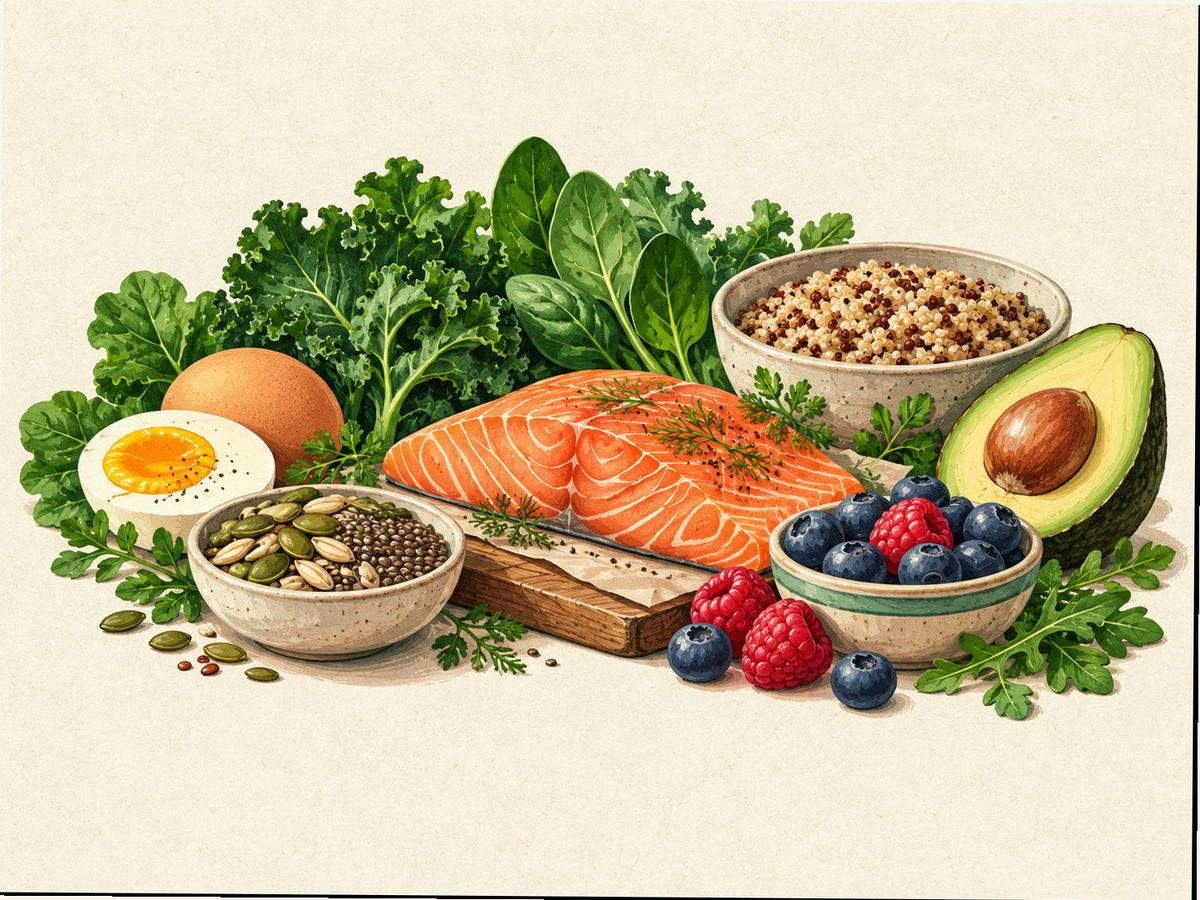
Calcium-rich foods
Milk, yogurt, cheese, calcium-fortified alternatives, calcium-set tofu, and some greens can contribute calcium for bone health.

Vitamin D sources
Fatty fish, eggs, and fortified foods provide vitamin D in varying amounts; some people may need individualized guidance about supplements.

Protein foods
Fish, poultry, eggs, dairy or alternatives, beans, lentils, nuts, and seeds can help meet protein needs and support muscle.
Fiber-rich plant foods
Vegetables, fruit, whole grains, beans, lentils, nuts, and seeds can support overall cardiometabolic health and regularity.
Unsaturated fats
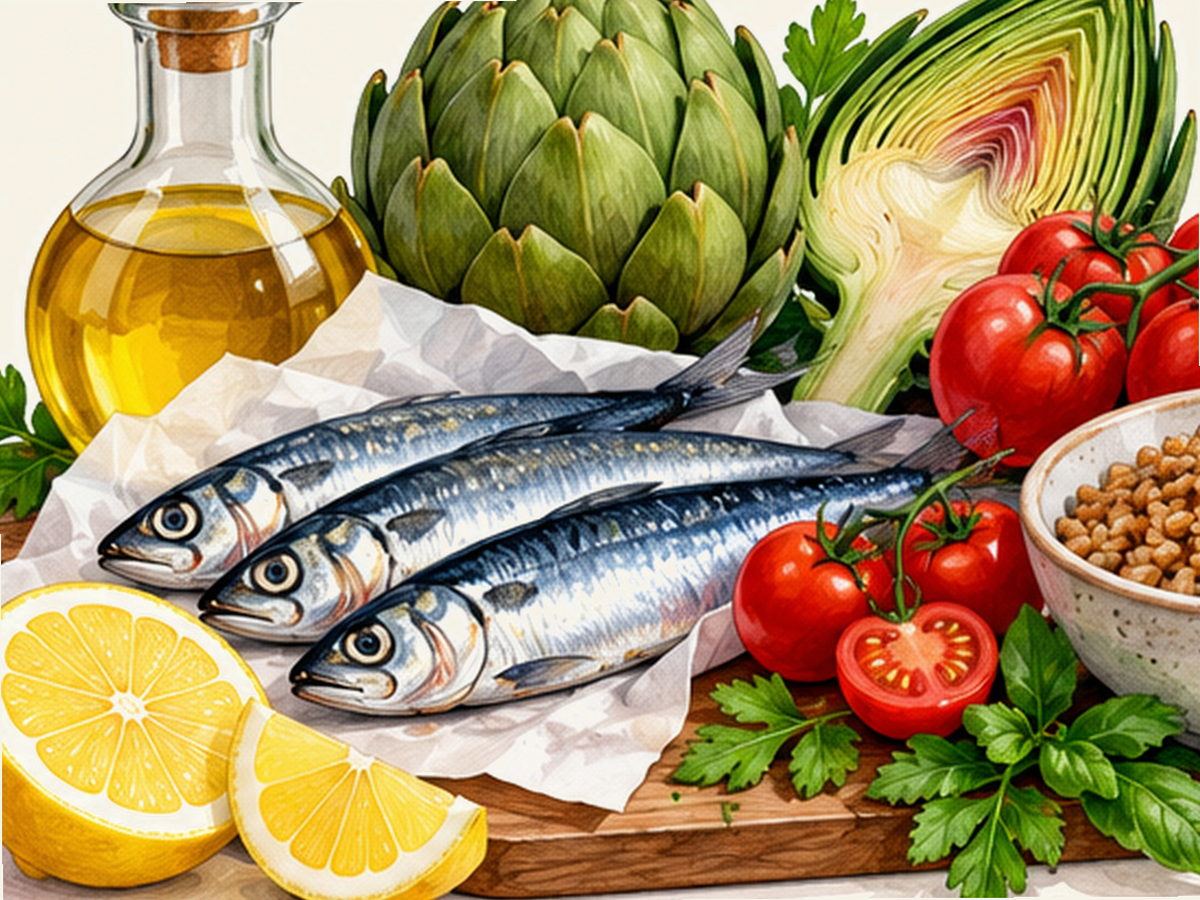
Olive oil, avocado, nuts, seeds, and fish can fit heart-healthy eating patterns in place of some saturated-fat sources.
In the kitchen
What this can look like in a meal
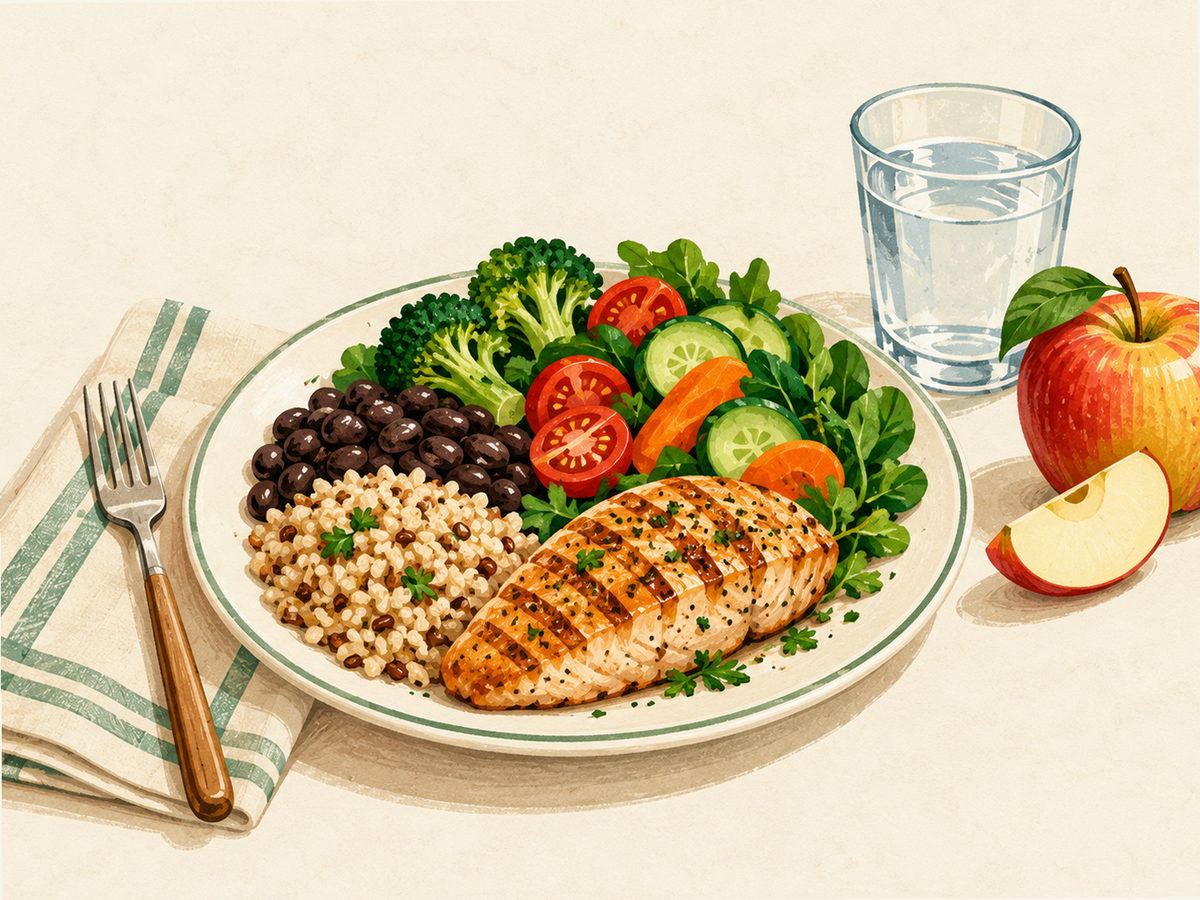
These familiar meal ideas illustrate food patterns, not a prescribed diet or a required portion size. The right choices depend on the person and their circumstances.

Yogurt, berries, oats & seeds
A simple breakfast with calcium, protein, fiber, and whole-food carbohydrates.
Salmon, vegetables & whole grain
Fish, vegetables, and a whole grain in a straightforward dinner.
Black bean bowl with avocado
Beans, vegetables, whole grain, and avocado in an easy mix-and-match meal.
Eggs, greens & whole-grain toast
A familiar meal with protein, vegetables, and a fiber-rich carbohydrate.
Looking for more cooking ideas? Explore public recipes on The Fuel Board.
What the evidence shows
What research tells us
The 2023 Menopause Society position statement does not recommend dietary modification, soy foods or soy extracts, or herbal supplements as proven treatments for hot flashes and night sweats because evidence is limited, inconsistent, or negative. Nutrition information should not promise symptom relief that research has not established.
ACOG emphasizes a balanced diet during the menopause transition and adequate calcium and vitamin D for bone health. Protein, fiber-rich foods, vegetables and fruits, whole grains, and unsaturated fats can fit an overall eating pattern that supports general midlife health, but they are not a substitute for evidence-based treatment when symptoms are disruptive.
Individual needs matter
When more personal guidance helps
Very heavy bleeding, bleeding between periods, bleeding after sex, or bleeding that feels unusual for you deserves medical evaluation rather than being assumed to be “just perimenopause.”
If hot flashes, night sweats, sleep problems, mood changes, vaginal or urinary symptoms, or other symptoms are disrupting daily life, evidence-based treatments are available. Food and supplements should not carry the burden of treating symptoms that need medical care.
Learn from the source